



Your shopping cart is empty!
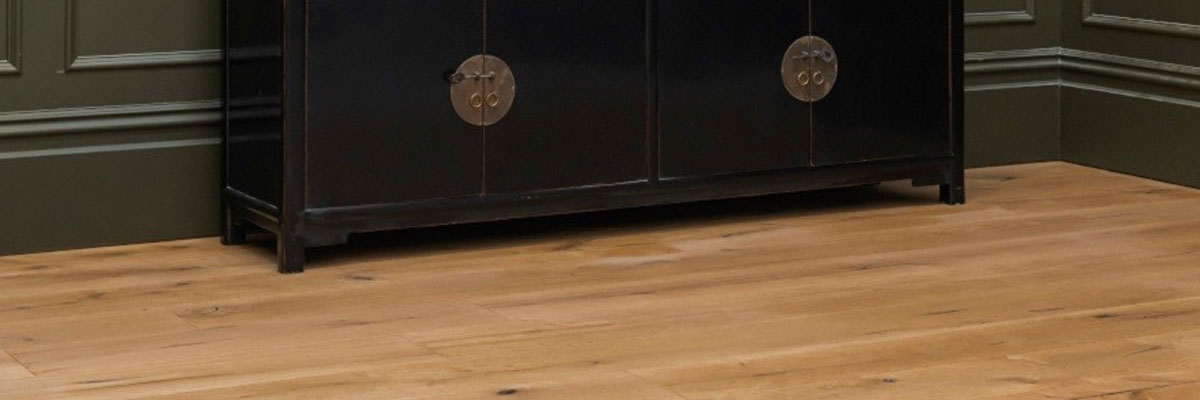
Light oak flooring samples rarely look alike. One looks cream, another looks yellow, and a third looks grey once it’s laid in your hallway floor. Retailers also use the terms “light” and “natural” differently, so a product name alone may not tell you exactly how a board will look in your home.
Natural light oak flooring is real oak in a pale shade, with the grain and knots still visible. This guide covers six checks to make before you order: tone, format, finish, thickness, room and subfloor, and samples.
What counts as natural light oak flooring?
Oak naturally ranges from pale to mid-golden brown. “Light oak” usually means a paler, less yellow shade. “Natural oak” usually means oak left closer to its own colour, which is often warmer. There is no fixed standard, so retailers use the two terms differently. Compare the actual samples rather than the names.
Most light oak flooring is engineered: a layer of real oak on top of a layered wood base. This construction is generally more dimensionally stable than solid oak when temperature and humidity change, so it’s used in kitchens, living rooms, and over underfloor heating. Check the guidance for the specific board you choose.
6 things to check before you buy
1. Tone and undertone
Look at the undertone as well as how pale the board is. Light oak can lean cream, yellow, or grey.
Hunston Handworked 23 is described as a light to medium oak. Classic Barnsley and Antique Heritage are light-smoked oaks, which means the colour has been treated rather than left natural. Drummond Grey is grey. If you want a natural tone, start with the first group and leave out the grey and smoked boards.
2. Plank, parquet or herringbone
Planks are long boards laid in straight lines. Parquet and herringbone use shorter blocks in a pattern.
| Format | What it looks like | Often used in |
| Plank | Long boards in straight lines | Living rooms, bedrooms, open-plan areas |
| Tumbled parquet | Short blocks with aged edges, in a repeating pattern | Hallways, dining rooms |
| Herringbone | Blocks laid in a zigzag pattern | Kitchens, hallways |
The plank sizes in this collection are 19 cm to 26 cm wide and 1.9 m to 2.2 m long. Wider, longer boards show more of each plank’s grain and knots, so they suit larger rooms. Patterned floors take longer to install than planks, so ask your fitter to quote for the pattern you’ve chosen.
3. Surface and finish
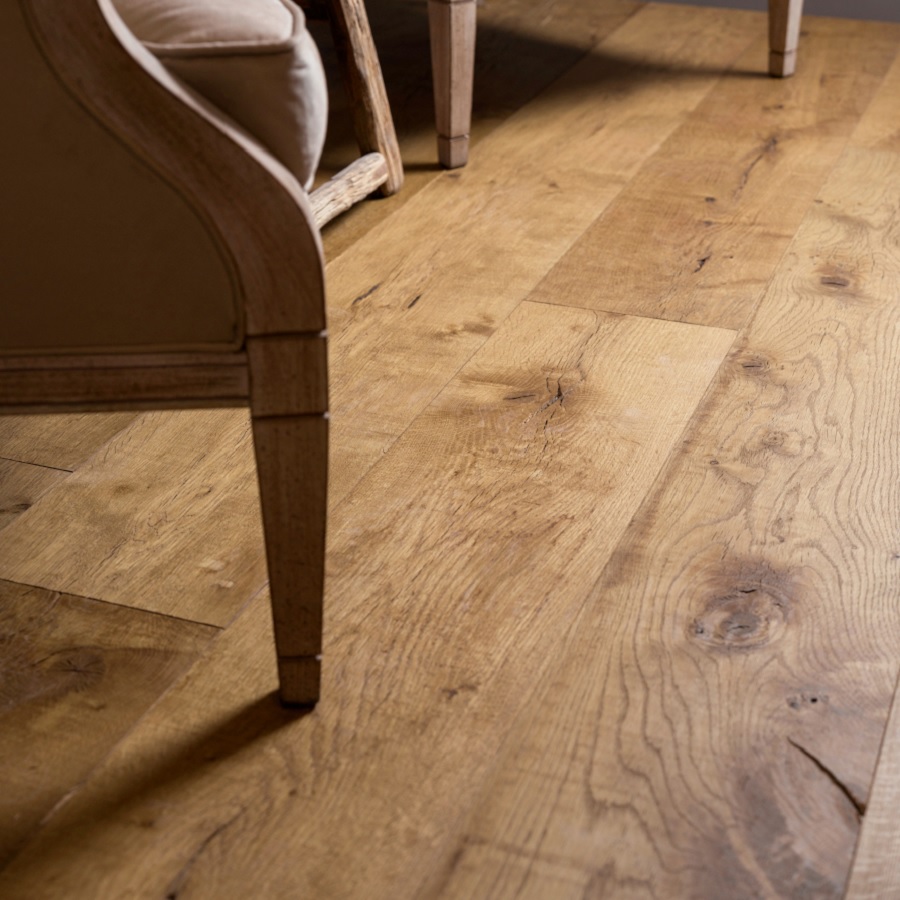
Smooth boards have an even surface with a light texture. Antiqued boards, such as Hampton Oak and Antique Heritage Oak, have more texture, knots and ageing marks, which make small scuffs less visible.
The finishes are mainlyUV-oiled or hardwax oiled. Oiled floors can usually be re-oiled in patches rather than sanded back completely, but follow the care guidance for your board. Matt, textured finishes show scuffs less than smooth, glossy ones, which helps in homes with children or pets.
4. Thickness and oak layer
Total thickness affects the floor height at doorways and where it meets other floors.
The oak layer on top, called the wear layer, determines how many times the floor can be sanded in future. A thicker wear layer can be sanded more times. Ask for both measurements before you order, and compare them when two boards look alike.
5. Room, subfloor and heating
The subfloor needs to be flat, dry and clean. Your fitter will check these conditions, as any necessary levelling work can add time to the installation.
Kitchens and hallways get more water and dirt than bedrooms. Wipe up spills straight away and put a mat at the door. If you have underfloor heating, check the board’s heating guidance, including the maximum surface temperature, before you buy. Suitability varies between boards.
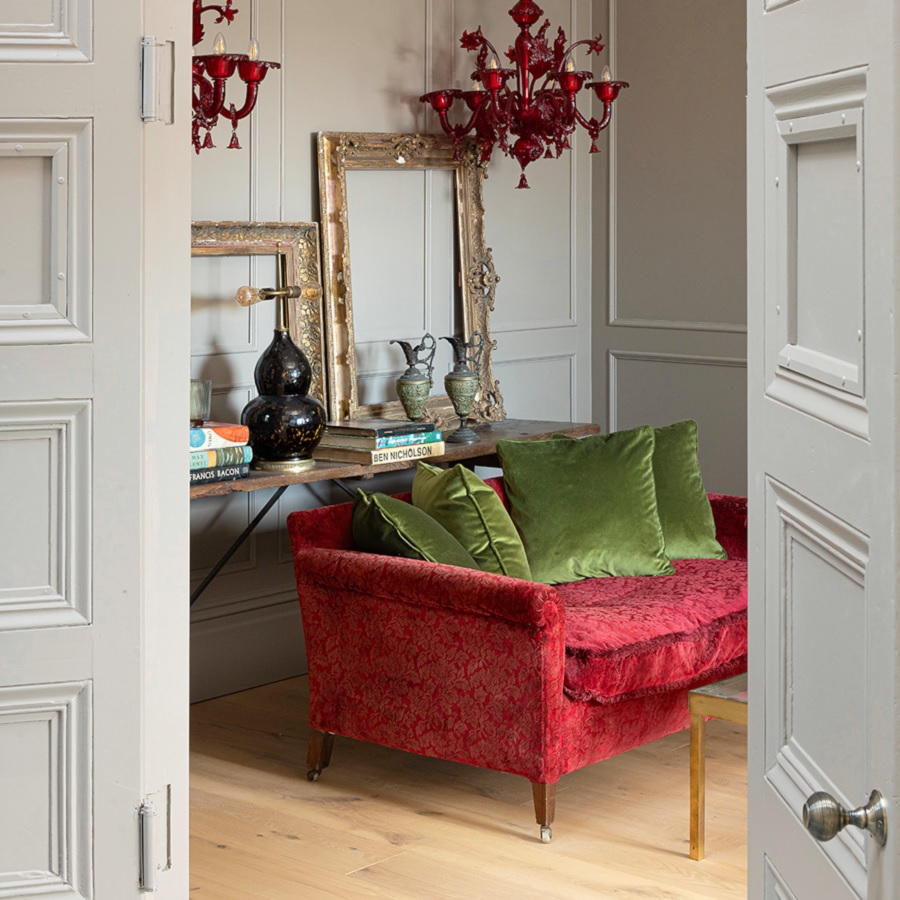
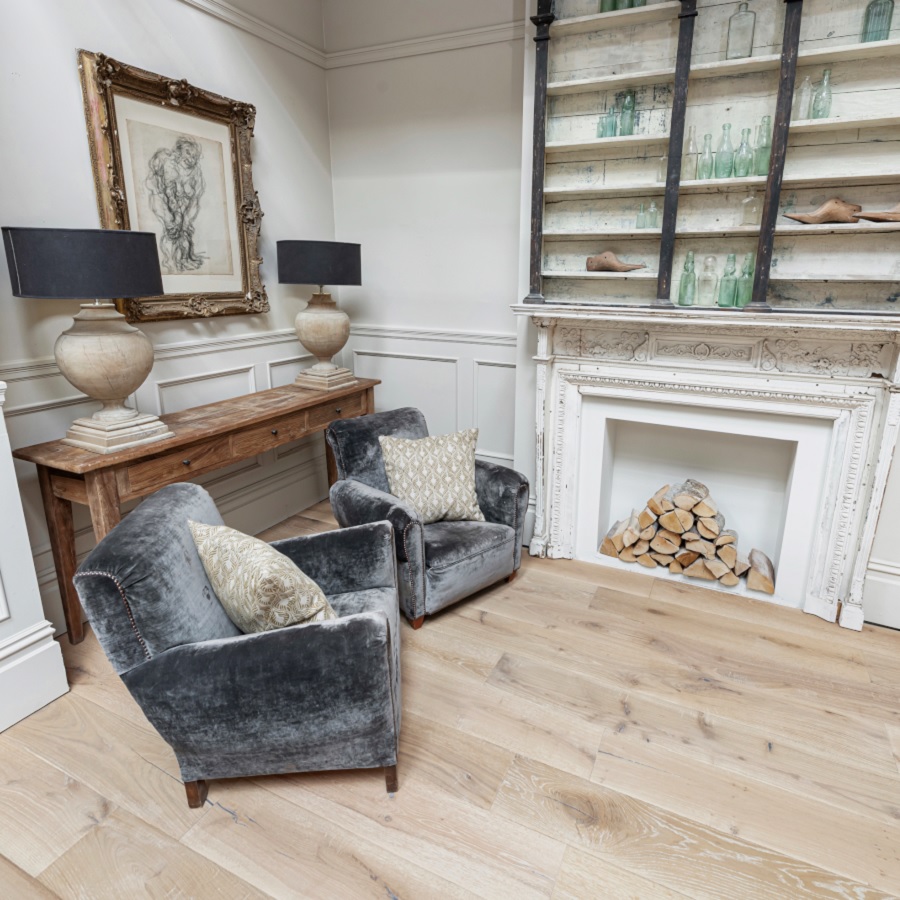
6. Samples, light and quantity
Daylight changes how light oak looks. A north-facing room has cooler light, so a board that looks cream in a shop can look paler and cooler at home. A south-facing room has warmer light, which can make the same board look more golden.
Put two or three samples on the floor next to your skirting boards, cabinets and wall colour, and check them in the morning and the evening. Order extra boards for cuts: around 10% is usual for planks, and more for patterned floors, so ask your fitter. If you’re near Cirencester, you can see boards in person at the Beswick Stone showroom.
Wrap up
Check six things before you order natural light oak flooring: the tone, the format, the finish, the thickness, the room and subfloor, and how samples look in your own light. Leave out grey and smoked boards if you want a natural colour, choose a matt, textured finish for rooms with heavy use, and check the heating guidance before you order for an underfloor heating system.
FAQs
What is natural light oak flooring?
It’s real oak in a pale colour that keeps its grain and knots. Most of it is engineered, with a real oak top layer on a layered wood base.
Does a light oak floor show marks?
Light oak hides dust and light scratches better than very dark floors, and matt, textured finishes hide more than smooth, glossy ones. A doormat and felt pads under furniture reduce marks on any floor.
Can you use light oak flooring with underfloor heating?
Often, yes, with engineered boards, but it depends on the board and the heating system. Check the manufacturer’s guidance and ask your fitter.
Related Products
