



Your shopping cart is empty!
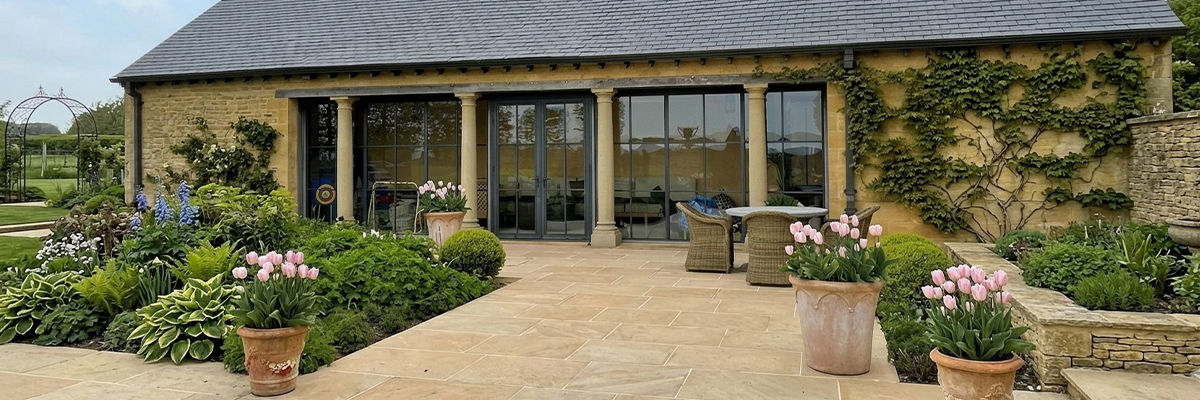
Outdoor paving is one of those decisions that stays with your home for years. Once the stone is laid, it becomes part of the garden’s character. That’s why choosing the right material matters more than many people realise.
A patio that looks great in photos might not perform well through a few British winters. Some paving fades quickly, some become slippery in the rain, and others simply don’t sit comfortably with the style of the garden.
Natural stone has remained a popular choice for outdoor spaces because it solves many of these problems. It’s strong, it handles weather well, and it tends to age in a way that actually improves the look of the space.
If you're planning a new patio, a pathway through the garden, or a set of stone steps between levels, it helps to understand what you’re buying before you place an order. This guide walks through the main types of outdoor stone used in landscaping and explains how to choose materials that will look right and last for years.
Why Natural Stone Is a Reliable Choice for Outdoor Paving
Patios and paths face constant use, especially with British weather in the mix. Rain, frost and daily foot traffic can be tough on paving. Natural Limestone handles it well. It’s solid underfoot, and its natural texture gives better grip in damp conditions.
Another advantage is appearance. Unlike manufactured paving slabs, natural stone isn’t perfectly uniform. Each piece carries small variations in colour and texture. When installed together, these variations give the surface depth and a more natural feel.
Over time, limestone also develops a gentle patina. Instead of looking worn out, it tends to settle into its surroundings and gain character.
Start With the Purpose of the Space
Before picking a type of outdoor stone, pause for a moment and think about how that part of the garden will actually be used. The right choice often becomes clearer once you picture the space in real life.
Take patios, for example. If the area will hold a dining table or garden furniture, larger paving slabs usually work better because they create a more stable and comfortable surface. Paths are a different story. They often look better with smaller stones that can follow gentle curves and weave naturally through planting. And where the garden changes level, thicker stone pieces are normally used for steps so they feel sturdy underfoot.
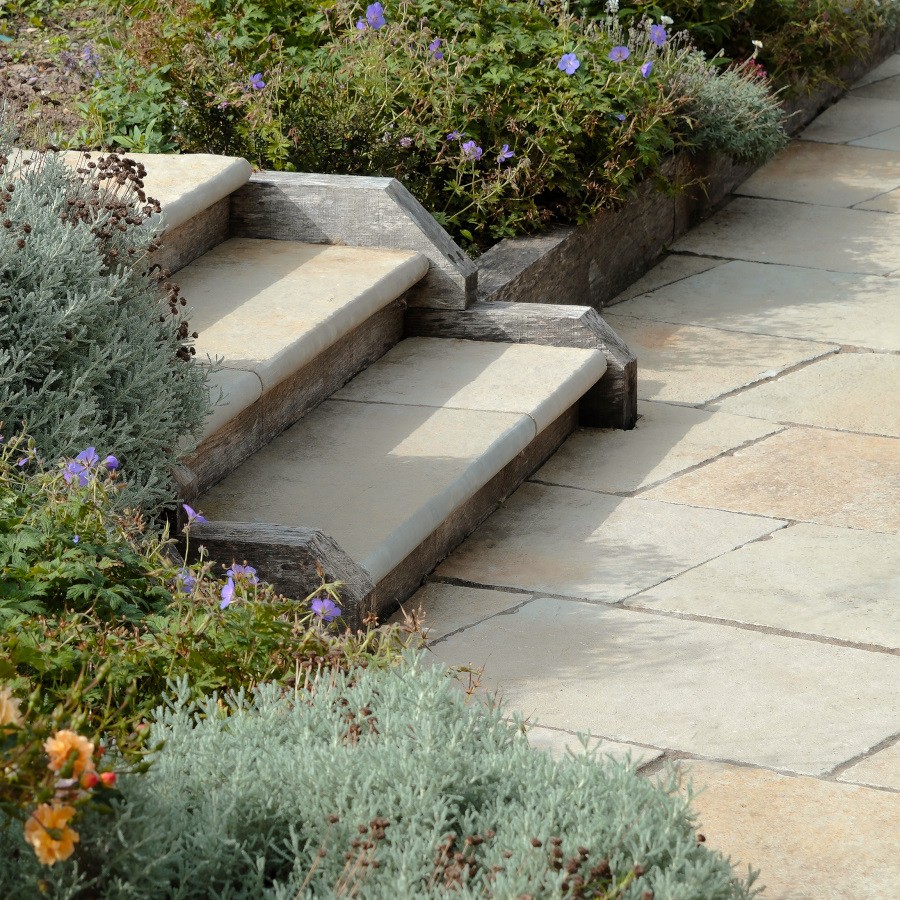
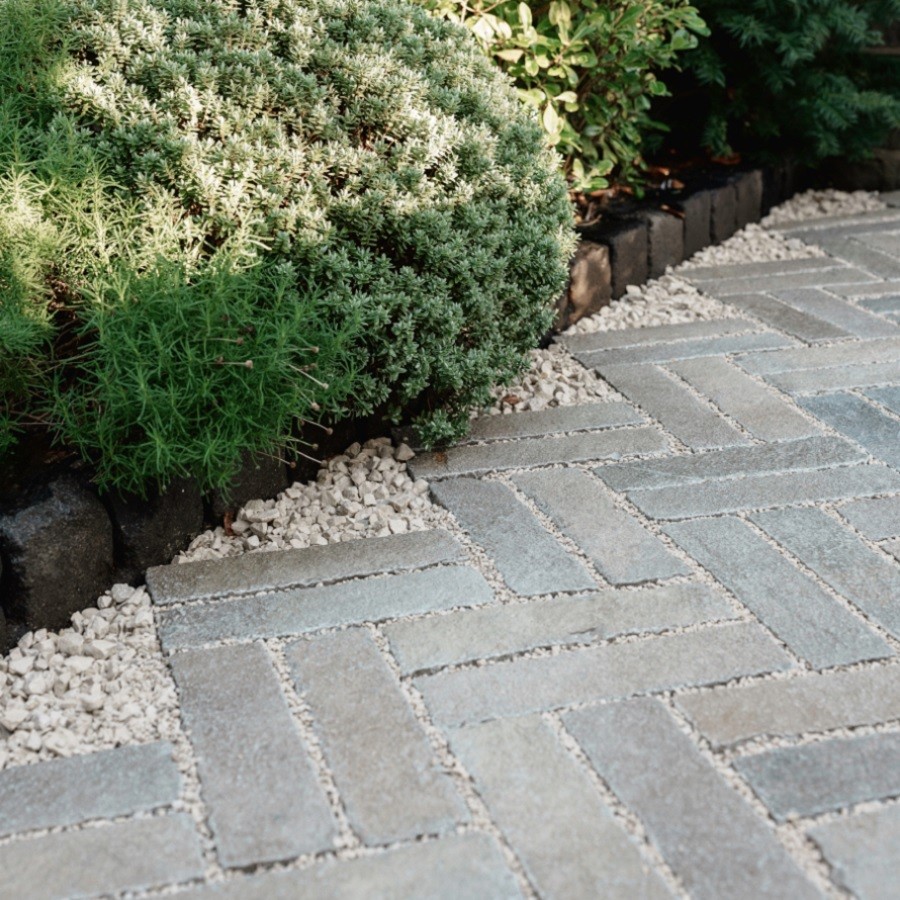
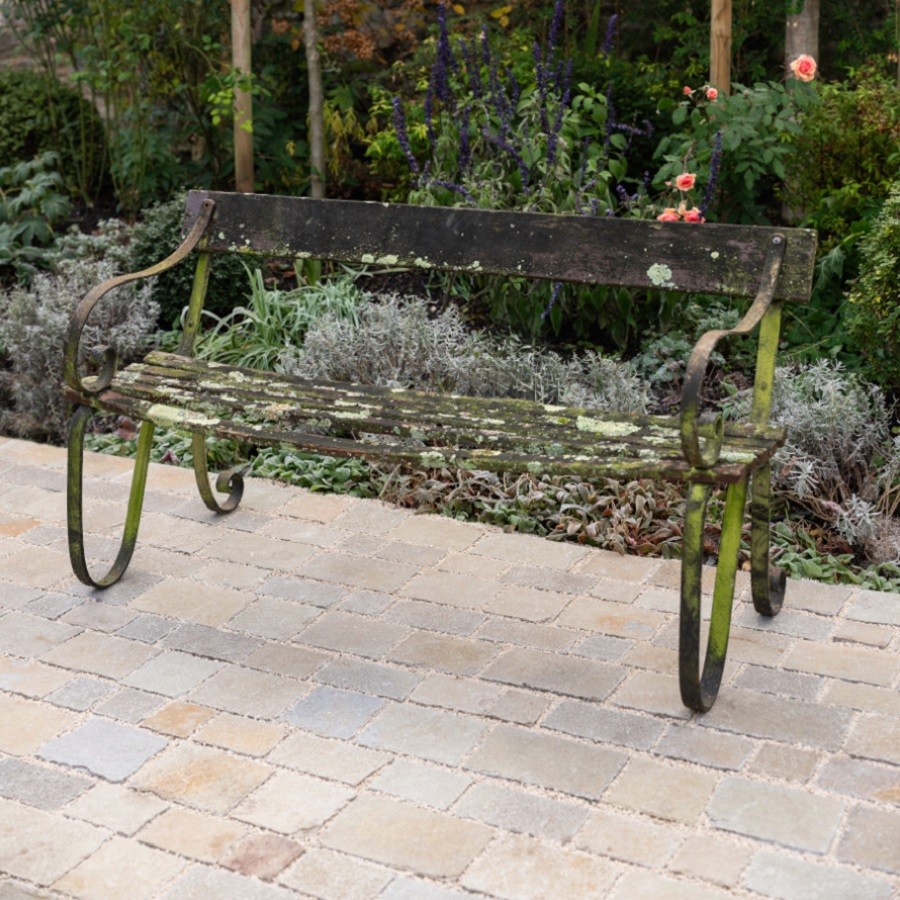
Looking at how each area will function first makes it much easier to choose a stone that fits the space properly.
Choosing Outdoor Stone Paving for Patios
Patios are often the centre of the garden. This is where people sit, eat, and spend time with friends and family.
Large limestone slabs are usually preferred when it comes to patios. There are some reasons:
- They form a clean and sleek surface and minimise joints running across the paving. What is obtained is a more open patio that is more convenient to use.
- Limestone also performs well in everyday outdoor conditions. It handles regular foot traffic without trouble, and the natural texture of the stone provides grip when the surface gets wet, something that matters in a typical British garden.
- Colour plays a role too. Many homeowners prefer the softer limestone tones such as honey, sand or light cream because they brighten the space without feeling too harsh. These colours tend to blend nicely with greenery, planting beds and natural wood furniture.
- Another advantage is longevity. When laid properly, limestone paving holds up well for many years. As it weathers, the surface develops a gentle patina that often improves the overall look of the patio rather than diminishing it.
Cobblestones for Garden Paths and Courtyards
There are paths that assist in connecting various parts of the garden. The material that you select may determine the appearance as well as the feel of strolling around the space.
Cobblestones are an excellent solution due to their traditional look and the ability to bend their design. They are smaller; thus, more convenient to work with and produce curves or intriguing patterns.
They are often used in:
- Garden pathways
- Courtyard paving
- Patio borders
- Driveway edges
Cobblestones may also be finished in various ways. Others have smooth, slightly worn edges, which would fit the traditional garden patterns, and others have a more allusive surface that gives a rustic appearance.
The small size of the stones also allows them to be used where bigger slabs would be too heavy or hard.
Slim Setts and Herringbone Stone Patterns
Slim sets comprise thin rectangular stones used to decorate layouts on pavings.
They are especially applicable in herringbone designs that give a light feeling of motion along the paths and patios. The stones are also fixed together with this pattern, assuring the surface remains stable as time goes by.
Slim setts are usually utilised in:
- Garden paths
- Decorative patio areas
- Borders around larger paving slabs
- Courtyard designs
The smaller size of the blocks permits a little more freedom of layout. They are frequently utilised by landscapers as an element of contrast, in combination with a larger limestone paving.
Stone Steps and Coping Stones for Level Changes
Not every garden sits perfectly flat. Many outdoor spaces include raised beds, terraces or sloped lawns.
Stone steps help connect these levels safely while keeping the design consistent with the rest of the paving.
Thicker limestone step treads are usually used here because they provide strength and durability. The natural stone finish also blends well with the surrounding paving.
Another very useful feature is the coping stones. They are placed over garden walls and elevated planters and guard the structure beneath them, as well as providing the building with a well-finished look.
Paving is done with the same family of stone, stepping and coping stones, which are used to make the whole garden look more cohesive.
Decorative Cabochon Stone Pavers
Outdoor spaces demand a bit of uniqueness.
Cabochon stone paving is a mixture of large blocks of limestone and tiny contrasting inlays, which form a pattern frequently found in the traditional European courtyards.
This type of paving works particularly well in:
- Formal garden patios
- Courtyard gardens
- Entrance terraces
- Character properties
Because of the pattern, cabochon paving often becomes a visual feature within the garden rather than simply a surface to walk on.
How Colour and Finish Affect the Final Look
The colour of the stone is a major factor in the feel of the completed garden.
Warmer colours like ivory, bone and pale grey will make it a clean, relaxed environment. Warm colours such as honey and sand can be used to give warmth and usually match with natural planting schemes.
Surface finish also influences the style. Gently aged edges create a traditional courtyard appearance, while cleaner lines work better in contemporary garden designs.
It’s always worth viewing stone samples outdoors in natural daylight before choosing a final colour.
Why Many Homeowners Choose Beswick Stone Outdoor Collections
In planning an outdoor project, it is useful to select materials that are compatible with each other as opposed to combining various products with each other, which are not compatible.
The outdoor stone collections available through Beswick Stone include limestone paving, cobblestones, slim setts, step treads and coping stones designed to complement each other.
This makes it easier to build a consistent landscape design. Patios, paths and raised areas can all be created using materials that share the same tones and textures.
The stones are also selected for durability, meaning they can handle British weather and everyday outdoor use without losing their character.
For homeowners planning a long-term garden improvement, having access to a coordinated range of outdoor stone makes the whole process far simpler.
Final Thoughts
Outdoor stone paving is one of the most noticeable elements in any garden. Choosing the right patio materials uk from the beginning saves trouble later and keeps the space looking good for years.
Limestone paving, cobblestones, slim setts and steps all serve their own purpose. Combined well, they bring structure to patios, pathways and outdoor spaces.
Picking quality stone from a well-planned collection can turn a garden from something ordinary into a space that feels properly finished.
Frequently Asked Questions
1. What is the best natural stone for outdoor patios?
Limestone is one of the most popular choices for outdoor patios because it is durable, weather-resistant, and offers good slip resistance.
2. Are cobblestones suitable for garden pathways?
Yes, cobblestones work very well for garden paths due to their durability, flexible layouts, and timeless appearance.
3. Does natural stone become slippery when wet?
Most natural stones, especially textured limestone, provide good grip and are safer in wet outdoor conditions.
4. How long does outdoor limestone paving last?
When installed properly and maintained well, limestone paving can last for many years while developing a natural aged look.
5. Why should matching paving and coping stones be used together?
Using matching stone collections helps create a more cohesive and visually balanced garden design.
Also Read:
Indoor to Outdoor Tiles: Buying Guide for Your Home
Terracotta Tile Buying Guide: How to Choose the Right Tile for Your Home
Related Products
